Moving Beyond AI Pilots
Explore the shift from AI experimentation toward an intelligent enterprise connecting data, models, agents, applications, workflows, governance, and people.
One of the most important discussions at Fierce Pharma Week 2026 centered on scaling intelligence across the enterprise — and a shift in the question organizations are asking.
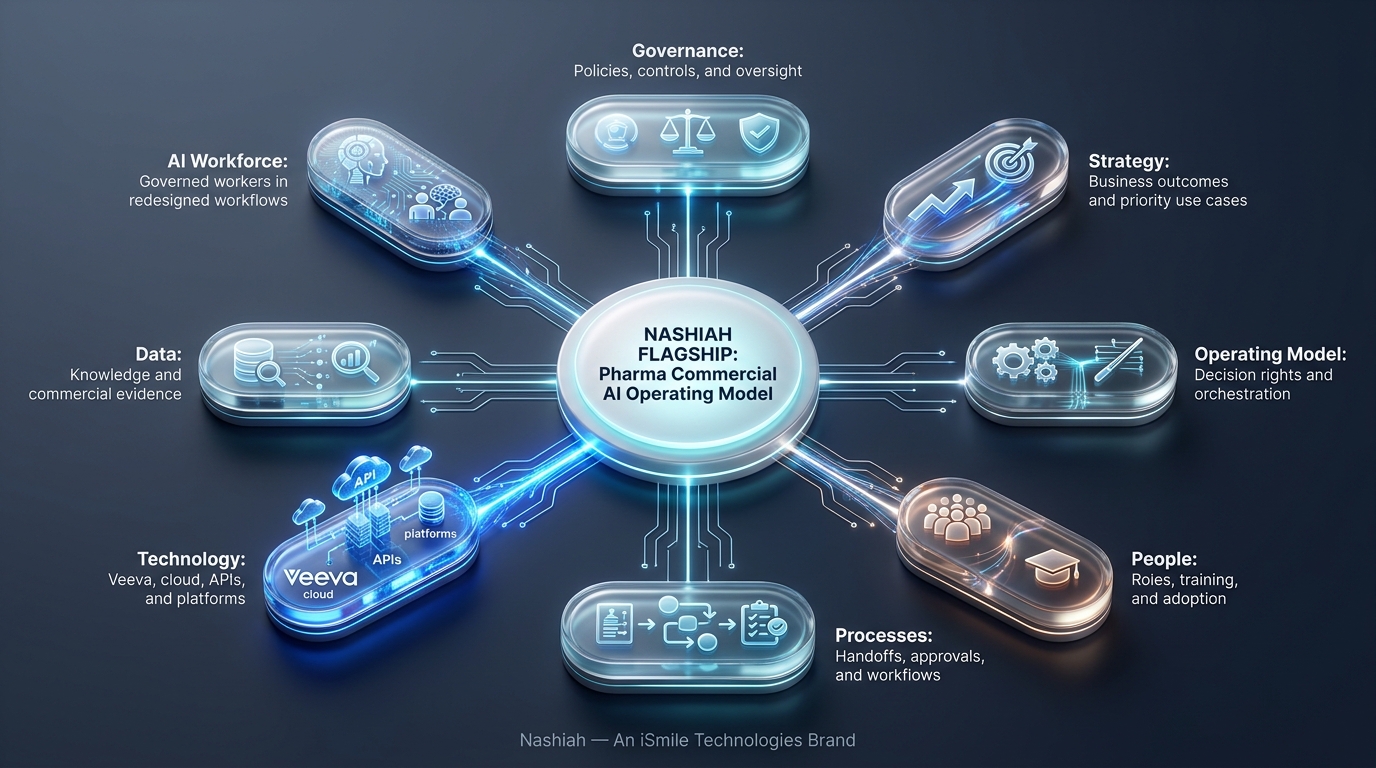
The question used to be "can AI do this?" At this point, there are enough pilots proving AI can summarize, analyze, recommend, generate, and automate. The harder question now is how to make intelligence operational across the enterprise — connecting data, models, agents, applications, workflows, governance, and people into one coordinated ecosystem, rather than a collection of isolated wins.
The direction of travel is toward an enterprise technology stack that increasingly operates continuously: agents monitoring signals, maintaining context, coordinating workflows, and surfacing decisions around the clock. But autonomy cannot mean an absence of accountability. Humans still establish objectives, set guardrails, determine where AI can act independently versus where approval is required, and remain accountable for outcomes.
Organizations that solve this as an architecture and operating-model problem — not a procurement problem — are the ones that move past AI experimentation into something more durable: an intelligent enterprise, where AI is infrastructure rather than a feature layered on top of existing systems.
The practical marker of progress isn't how many pilots an organization has running. It's how many of last year's pilots are now permanent, governed, and connected to the rest of the stack.
This piece draws on the "Scaling Intelligence Across the Enterprise" panel at Fierce Pharma Week 2026, featuring Tra La (Galderma), Grace Qiao (Bristol Myers Squibb), Tatiana Sorokina (Novartis), Sonata Taman (Amgen), Brigham Hyde, and Arjun Bidesi.