Omnichannel Needs an Intelligence Layer
Connecting channels is not the same as connecting decisions. Why pharma commercial teams need an always-on intelligence layer across CRM, media, web, content, analytics, and field — with humans firmly in control.
One of the strongest conversations at Fierce Pharma Week 2026 centered on omnichannel orchestration — and a distinction that is easy to state and hard to operationalize: connecting channels is not the same as connecting decisions.
Most pharma commercial organizations have spent years wiring channels together. CRM knows one part of the HCP relationship. Media knows another. Web behavior reveals something else entirely. Field teams carry context that may never make it into the marketing workflow, and content operations sit apart from all of it. Each system holds a fragment of the truth, and stitching those fragments into a single next action still falls, in most organizations, to a person manually connecting the dots.
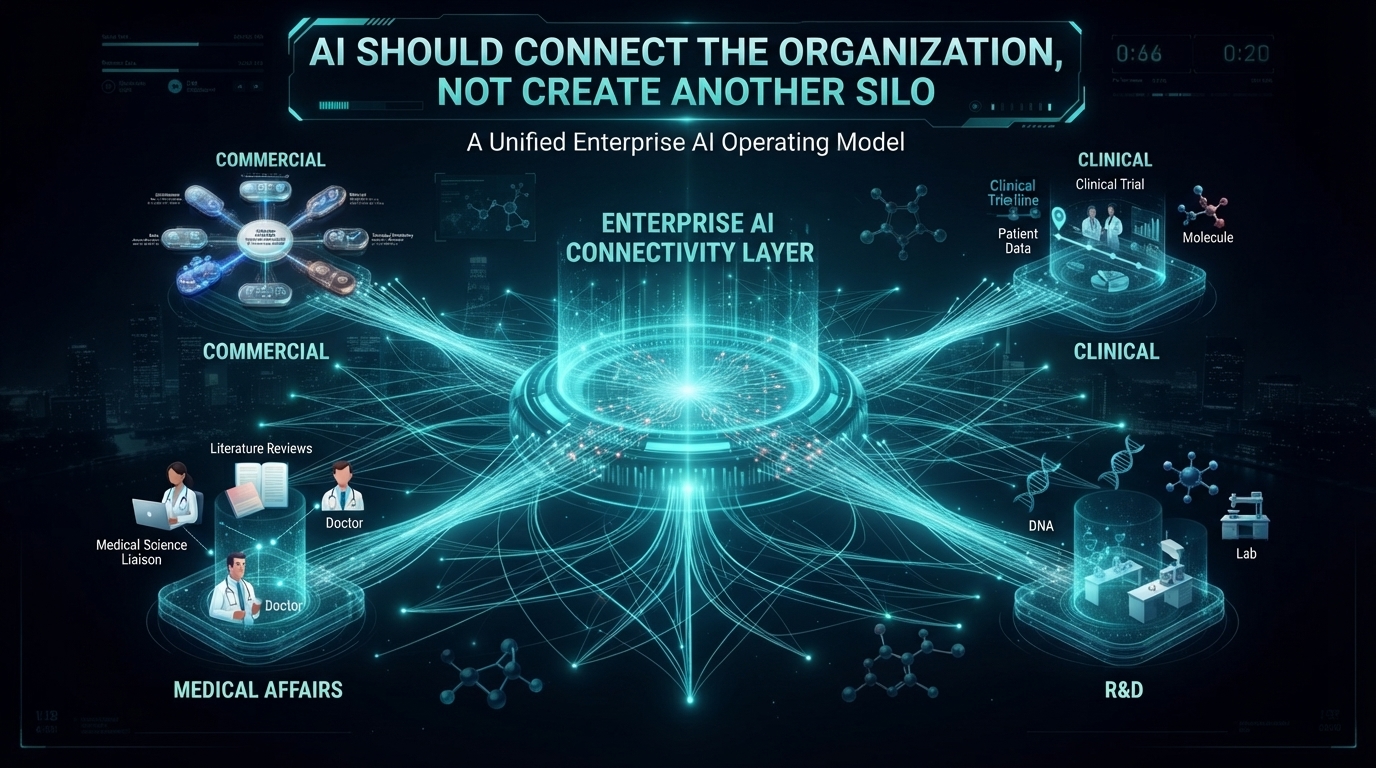
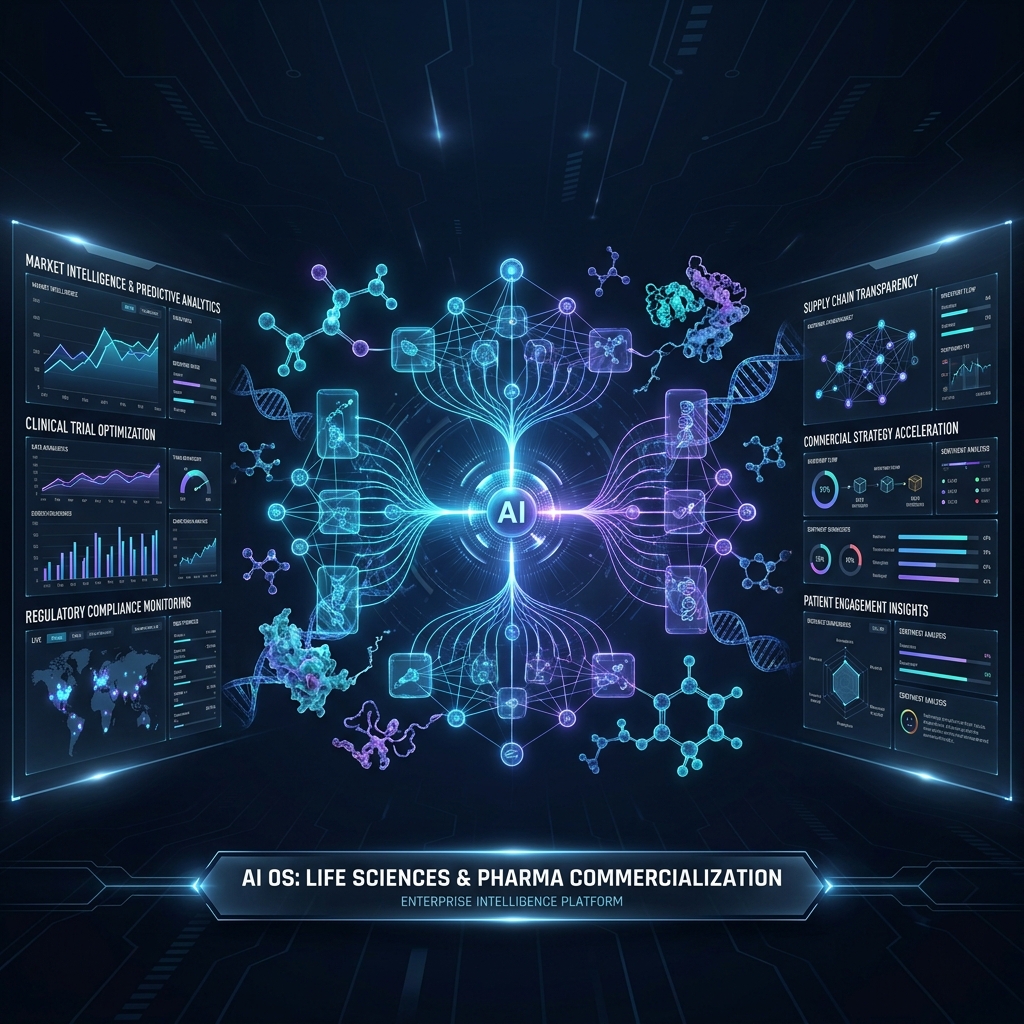
The next evolution in omnichannel is not another integration project — it is an always-on intelligence layer that sits across the entire ecosystem. Picture AI agents continuously observing signals across CRM, media, web, content, analytics, and field activity, twenty-four hours a day. Not producing another dashboard to be reviewed at the next planning cycle, but actively understanding context: recognizing when something meaningful changes, determining what information is actually relevant, recommending the next best action, and coordinating that action across the appropriate channel in real time.
This is not a case for autonomous marketing without people. It is a case for humans in control, with AI working continuously in the background. Humans set the strategy, the guardrails, and the accountability. AI supplies the speed, the context, and the orchestration that becomes practically impossible for a human team to sustain across thousands of simultaneous interactions.
Framed simply, that is where omnichannel is heading: from channels, to signals, to context, to decisions, to actions, to learning — a continuous loop rather than a campaign calendar.
For commercial and technology leaders, the practical takeaway is to stop evaluating omnichannel maturity by how many channels are connected, and start evaluating it by how quickly a signal in one channel becomes a coordinated, governed action across the others.
This piece draws on discussion from the "Omnichannel Orchestration That Improves Timing, Relevance, and Impact" panel at Fierce Pharma Week 2026, featuring Kimberly Coleman Clotman (Pfizer), Bradley Deutsch, Matt Hessler, Timothy Natal (Merck), and Ruth Woodrow (ViiV Healthcare).