The Operating Model Has to Change
You cannot put AI on top of a broken workflow and call it transformation. Explore what an AI-enabled operating model could look like.
A clear message from Fierce Pharma Week 2026: you cannot put AI on top of a broken workflow and call it transformation.
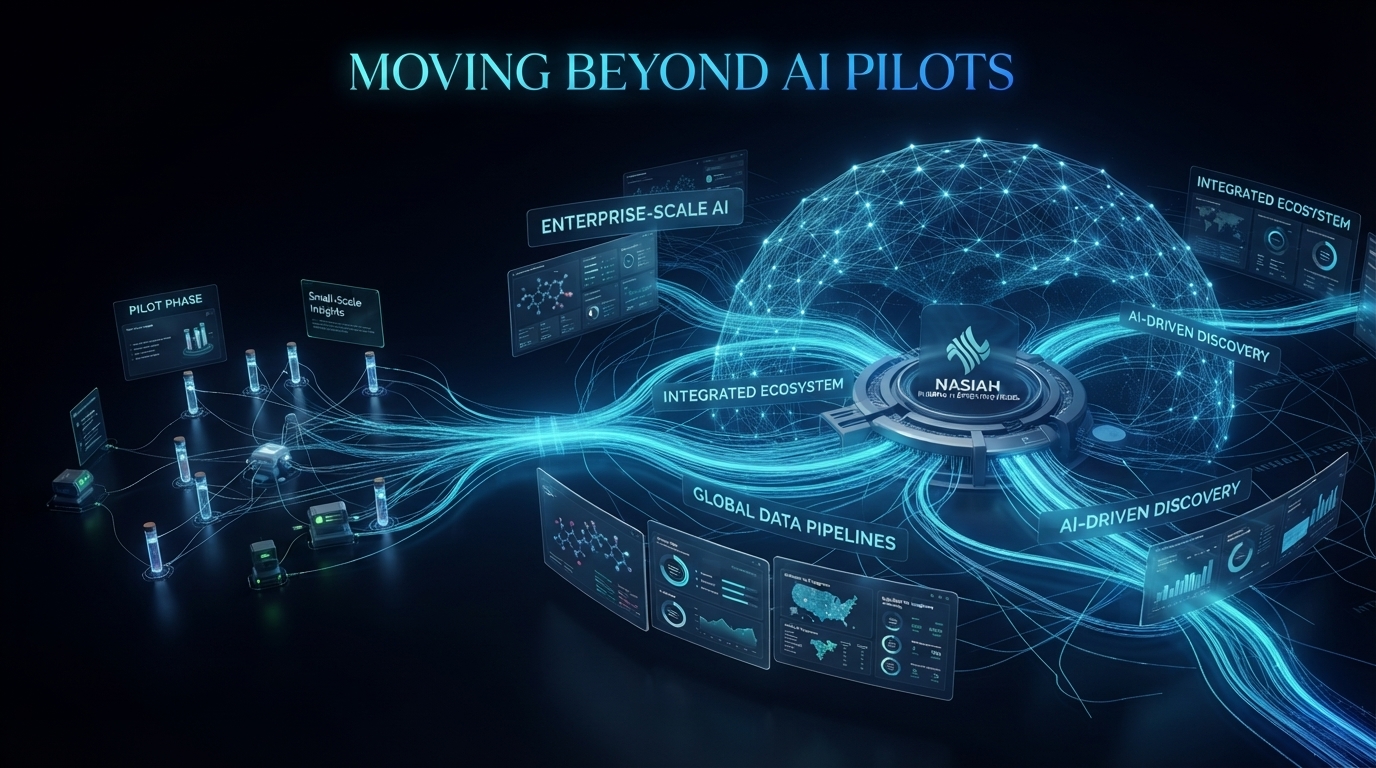
Pharma commercial teams can deploy copilots, deploy agents, and connect more data — but if a decision still moves through five teams, seven handoffs, and multiple disconnected systems, AI will simply help the organization navigate that complexity a little faster. It won't remove the complexity itself.
The bigger opportunity is redesigning the operating model around what AI now makes possible. Consider a workflow where an agent identifies a new signal, another understands the customer context, another checks whether approved content exists, and another recommends the next action — with the appropriate human reviewing or intervening only where judgment is genuinely required, and the system executing within established guardrails. The outcome then feeds back into the next decision automatically.
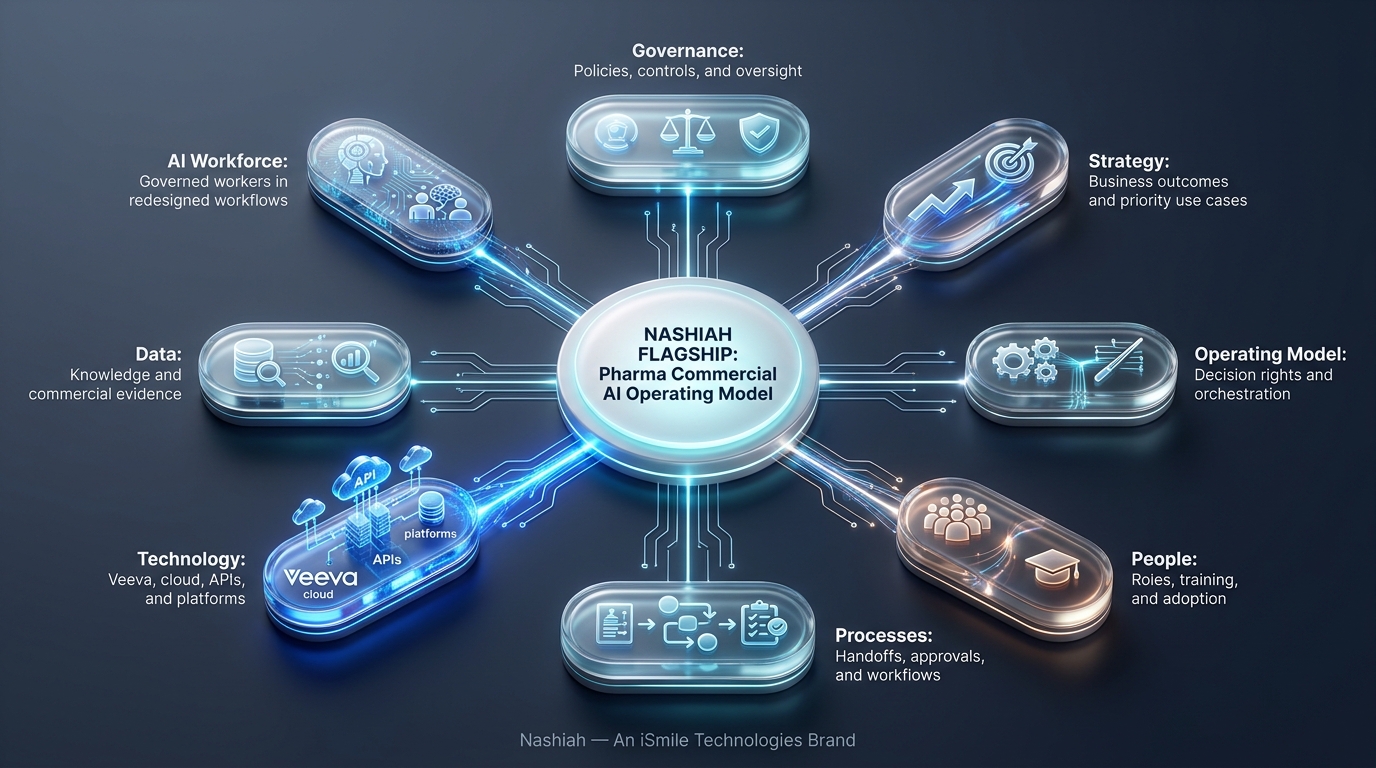
That is a fundamentally different model from adding AI features to today's applications: twenty-four-hour intelligence, but decisions that stay human-controlled. It is not a feature roadmap. It is a redesign of the workflow itself — roles, decision rights, approvals, and hand-offs, rebuilt around what agents can now reliably do.
Most transformation programs stall not because the AI doesn't work, but because the workflow around it was never rebuilt to use it. That redesign work is harder than any model selection decision, and it is usually where the real value sits.
This piece draws on the operating-model panel at Fierce Pharma Week 2026, featuring Lindsay Benedict (Biogen), Jenn Bridwell, Frank Corr, and Kishan Kumar (Novartis).